
Share article
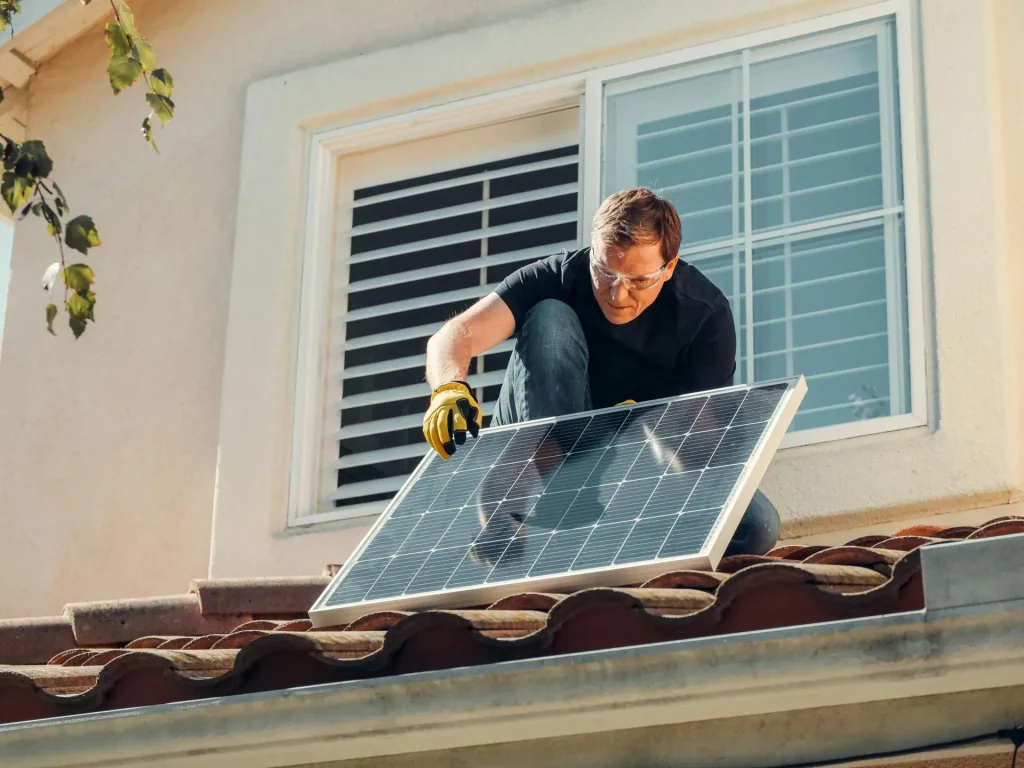
Are you tired of spending money on petrol, diesel, and electricity bills? Discover why more Nigerians are turning to solar energy and how you can take control of your electricity expenses.
Published by Jakinsab International Limited | October 15, 2026 | 7-minute read
Imagine This: Another Evening Without NEPA Light!
It’s a typical Tuesday evening in Lagos.
You’ve just returned home after spending hours in traffic. All you want is a cool room, a decent meal, and some relaxation.
You settle down, switch on the television, and just as your favourite programme begins…
NEPA takes the light!
You wait a few minutes, hoping electricity will return. Nothing happens.
Reluctantly, you step outside to start your generator.
Then you remember something: you’ve run out of fuel!
Sounds familiar?
For millions of Nigerians, this isn’t an occasional inconvenience. It’s a frustrating reality that affects how we live, work, study, and run our businesses.
From the barber who needs electricity to power his clippers to the frozen-food seller worried about spoiled goods, unreliable electricity has become an expensive part of everyday life.
But what if there were a better way?
What if you could generate your own electricity, reduce your dependence on generators, and take greater control of your energy expenses?
Welcome to the world of solar energy.
And no, you don’t need to be a millionaire to get started.
1. The Real Cost of Electricity in Nigeria: Are You Paying More Than You Think?
When most Nigerians calculate their electricity expenses, they consider only their prepaid meter recharge or monthly electricity bill.
But the real cost of electricity goes beyond that.
Think about it.
How much do you spend on petrol or diesel every week?
How much did you spend servicing your generator last month?
What about replacing engine oil, spark plugs, filters, and other components?
And let’s not forget the indirect costs: interrupted business activities, damaged appliances, spoiled food, and lost productivity.
For business owners, these expenses can significantly reduce profitability.
Meet Tunde and Amaka: Two Nigerian Business Owners
Let’s consider a simple example.
Tunde operates a barbershop in Ikeja, Lagos.
Every day, he spends money fuelling his generator because he cannot afford to disappoint customers when electricity goes off.
Now meet Amaka, who runs a similar barbershop but has installed a properly sized solar system to power her lights, fans, clippers, television, and other essential equipment.
While Tunde continues to depend heavily on fuel, Amaka uses solar electricity during the day and stored battery energy when sunlight is unavailable.
Over time, Amaka may spend considerably less on generator fuel and maintenance.
The difference isn’t necessarily that Amaka earns more money.
It’s that she’s made an investment that can reduce her recurring operating expenses.
Of course, her actual savings depend on the installation cost, energy consumption, equipment quality, and how much grid or generator electricity the system replaces.
That’s the economic opportunity solar energy presents.
2. Nigeria Has Abundant Sunshine. Why Aren’t We Taking Greater Advantage of It?
Here’s something worth thinking about.
Nigeria receives substantial sunlight throughout the year, yet many households and businesses still depend heavily on petrol and diesel generators.
Meanwhile, the sun continues to shine over our rooftops, offices, schools, markets, and factories.
Solar photovoltaic (PV) technology allows us to convert sunlight directly into electricity.
It is one of the most practical ways to generate electricity close to where it is consumed.
And Nigeria is increasingly recognising its potential.
According to the World Bank, Nigeria’s Distributed Access through Renewable Energy Scale-up (DARES) programme aims to provide new or improved electricity access to more than 17.5 million Nigerians through renewable energy solutions. World Bank
This represents a significant national commitment to expanding electricity access beyond conventional grid infrastructure.
But you don’t have to wait for a government programme before exploring solar energy for your home or business.
The technology is already available.
The real question is whether you’re ready to take advantage of it.
3. Five Reasons Every Nigerian Should Seriously Consider Solar Energy
Reason 1: Spend Less on Petrol and Diesel
Let’s start with what matters to most Nigerians: money!
Fuel prices can be unpredictable, and operating a generator for several hours daily quickly becomes expensive.
Solar energy provides an alternative.
Once installed, solar panels generate electricity from sunlight without requiring you to purchase fuel for every unit of energy produced.
Although solar systems require an initial investment and occasional maintenance, they can substantially reduce generator running hours and fuel consumption.
Imagine redirecting some of your monthly fuel expenses towards your children’s education, business expansion, savings, or other important priorities.
That’s money working for you instead of disappearing through your generator’s exhaust pipe.
Reason 2: Enjoy Greater Control Over Your Electricity Supply
One of the biggest frustrations of electricity supply in Nigeria is uncertainty.
You may have electricity throughout the morning, only to experience an outage just when you need power the most.
Even customers in relatively well-served areas can experience interruptions.
With an appropriately designed solar hybrid system, you can reduce your dependence on grid availability.
During the day, solar panels generate electricity to power your appliances.
Excess energy, where available, can charge batteries for use at night or during outages.
Think about the convenience of having your lights, television, internet router, fans, and other essential appliances running even when grid electricity is unavailable.
However, continuous power depends on proper system sizing, battery capacity, weather conditions, and your electricity consumption.
Solar gives you more control, not unlimited electricity.
Reason 3: Protect Your Business from Unnecessary Downtime
If you’re a Nigerian entrepreneur, you already understand that time is money.
Consider these everyday situations:
- A fashion designer cannot complete a customer’s outfit because there is no electricity.
- A frozen-food seller risks losing inventory during prolonged outages.
- A cybercafé loses customers because computers and internet equipment cannot operate.
- A pharmacy needs dependable electricity to maintain suitable storage conditions for temperature-sensitive products.
- A small manufacturing business struggles to meet production deadlines because its generator develops a fault.
These challenges affect revenue, productivity, and customer satisfaction.
A properly engineered solar installation can support essential business operations while reducing reliance on generators.
For many small and medium-sized enterprises, solar energy isn’t simply an environmental decision.
It’s a business continuity strategy.
Reason 4: Enjoy a Quieter, Cleaner Environment
If you’ve ever tried sleeping beside a noisy generator, you’ll appreciate this benefit.
Generators produce noise, exhaust fumes, and air pollution.
In densely populated Nigerian neighbourhoods, several generators may operate simultaneously, affecting air quality and general comfort.
Solar panels generate electricity without combustion or exhaust emissions at the point of use.
And unlike generators, they operate silently.
Imagine sitting outside your house in the evening without the constant background noise of multiple generators.
Or enjoying fresh air without worrying about exhaust fumes entering through your windows.
That’s another benefit of reducing generator dependence.
Cleaner air. Less noise. A more comfortable environment.
Reason 5: Make a Long-Term Investment in Your Property
Solar installation is not just another household expense.
When properly designed and maintained, it can become a valuable part of your property’s energy infrastructure.
Quality solar panels commonly come with long-term performance warranties, often spanning 25 years or more.
However, this does not mean every component will last that long.
Batteries, inverters, and other electrical components have different service lives and may require replacement during the system’s operating life.
Nevertheless, a well-designed system can generate significant value through electricity cost savings over many years.
Rather than purchasing fuel every week indefinitely, you are investing in an asset that produces electricity.
The important thing is to make that investment wisely.
4. But Isn’t Solar Too Expensive for the Average Nigerian?
This is probably the most common question we hear.
And it’s a valid concern.
Let’s address it.
Yes, installing a solar system requires an upfront investment.
Depending on your energy requirements, the equipment and installation costs can be substantial.
However, the misconception is that you must power every appliance in your house before solar becomes worthwhile.
That’s simply not true.
You Can Start Small and Expand Gradually
You don’t necessarily need a large solar installation from day one.
Here are three practical approaches.
Option A: Essential Loads
Start with a system designed to power your lighting, fans, television, internet router, and phone charging.
This can be suitable for households seeking basic energy security.
Option B: Essential Loads Plus Refrigeration
A larger system may accommodate your refrigerator, additional fans, laptops, and other selected appliances.
Option C: Comprehensive Home or Business Solar
A properly sized system can support higher electricity consumption, including selected air conditioners, pumps, and commercial equipment.
The investment increases with your energy requirements.
More importantly, your system should be designed around what you actually need, not merely the equipment a vendor wants to sell.
At Jakinsab International Limited, we believe that a good solar solution begins with understanding your energy consumption and budget.
Because buying an expensive system that cannot meet your needs is just as frustrating as having no solar system at all.
5. How Does Solar Energy Actually Work?
You don’t need an engineering degree to understand the basics.
A typical solar hybrid installation consists of four major components.
1. Solar Panels — The Electricity Producers
Solar panels capture sunlight and convert it into direct current (DC) electricity.
The amount of electricity generated depends on the installed panel capacity, available sunlight, orientation, shading, and other environmental conditions.
2. Solar Inverter — The Power Converter
The inverter converts DC electricity into alternating current (AC) electricity suitable for most household and commercial appliances.
Hybrid inverters can also manage power from solar panels, batteries, and other compatible electricity sources.
3. Battery Storage — Your Energy Reserve
Batteries store electricity for use when solar generation is insufficient, including at night or during outages.
Battery capacity determines how much energy you can store, while the connected electrical load influences how long that stored energy will last.
4. Protection and Distribution Equipment — Your Safety System
Circuit breakers, isolators, surge protection devices, appropriately sized cables, and earthing systems help ensure that electricity is distributed safely.
These are not optional extras. They are essential elements of a professionally engineered installation.
What Happens During the Rainy Season?
Another common misconception is that solar panels stop working whenever it rains.
That’s not entirely correct.
Solar panels generate electricity from sunlight, including diffuse sunlight passing through clouds.
However, electricity production generally reduces under heavy cloud cover.
This is why system design must account for seasonal weather variations, daily energy requirements, and battery storage.
A correctly designed system should consider Nigeria’s rainy season rather than assuming every day will be perfectly sunny.
6. Before You Buy Solar, Avoid These Common Mistakes
Unfortunately, not every solar installation delivers the expected results.
Some Nigerians have invested significant amounts of money in systems that fail to meet their requirements.
Often, the problem isn’t solar technology itself.
It’s poor system design, inferior components, or improper installation.
Before investing, pay attention to these five issues.
Mistake 1: Buying an Inverter Without Calculating Your Loads
A 5kVA inverter does not automatically mean it can power every appliance in your home.
Inverter capacity, battery capacity, and solar generation must be considered together.
Mistake 2: Choosing Equipment Based Solely on Price
The cheapest quotation may not provide the best long-term value.
Equipment quality, warranty support, installation standards, and expected performance matter.
Mistake 3: Ignoring Battery Capacity
Your inverter might be powerful enough to run your appliances, but an undersized battery could leave you without electricity after a short period.
Mistake 4: Overlooking Electrical Safety
Incorrect cable sizing, inadequate protection, poor earthing, and unsuitable installation practices can create serious safety risks.
Mistake 5: Hiring Inexperienced Installers
Solar installations involve electrical engineering, system integration, and safety considerations.
Professional assessment and installation are critical.
Remember:
A solar system is only as reliable as its design, components, installation, and maintenance.
7. How Do You Know If Solar Is Worth It for You?
Before making a decision, ask yourself these questions:
- How much do I spend monthly on grid electricity, petrol, diesel, and generator maintenance?
- How many hours of electricity do I typically receive each day?
- Which appliances must remain powered during outages?
- How many hours of backup electricity do I need?
- What budget can I reasonably allocate to solar installation?
Your answers will help determine the type and capacity of system you require.
Here’s a Simple Exercise
For the next 30 days, keep a record of your electricity-related spending.
Include your prepaid meter purchases, petrol or diesel expenses, generator servicing, and other relevant costs.
At the end of the month, calculate your total.
Then multiply your monthly average by 12.
You might be surprised by how much you’re already spending annually to keep the lights on.
Now compare that amount with the installation cost and expected performance of a suitable solar system.
A professional assessment can help you estimate potential annual savings and the investment payback period.
The goal isn’t simply to buy solar panels. It’s to make an informed investment decision.
☀️ Not Sure What Solar System You Need? Use Our Solar Calculator!
You don’t need to guess how many solar panels, batteries, or what inverter capacity your home or business requires.
At Jakinsab International Limited, we’ve developed a Solar Calculator to help you take the first step towards energy independence.
Our calculator helps you:
✅ Estimate your electricity requirements.
✅ Understand your potential battery storage needs.
✅ Explore suitable solar system capacities.
✅ Make more informed decisions about your solar investment.
Whether you’re considering solar for a small apartment, a family home, an office, or a commercial business, understanding your energy needs is the right place to start.
Stop guessing. Start planning your solar journey today!
👉 CLICK HERE TO USE THE JAKINSAB SOLAR CALCULATOR
Your journey towards reliable and affordable electricity starts with understanding your energy needs.
8. The Future of Electricity in Nigeria Is Changing. Will You Be Part of It?
Nigeria’s electricity challenges will not disappear overnight.
Expanding generation capacity, strengthening transmission networks, improving distribution infrastructure, and implementing effective regulations remain essential.
Solar energy is not a substitute for a functional national electricity system.
However, it is an important part of the solution.
For households, it offers greater energy independence.
For businesses, it can improve operational resilience and reduce recurring costs.
For underserved communities, it can help provide electricity where conventional grid infrastructure is unavailable or inadequate.
And for the country, greater adoption of renewable energy can support economic development, reduce dependence on fossil-fuel generators, and create opportunities across the clean-energy industry.
The transition is already happening.
The question is no longer whether solar energy has a role to play in Nigeria’s electricity future.
The question is how quickly more Nigerians can access reliable, affordable, and properly engineered solar solutions.
9. Your Journey to Energy Independence Starts with One Decision
Think about what reliable electricity could mean for your family or business.
No more rushing to buy fuel every time the power goes out.
Fewer interruptions to your work.
Reduced generator noise and maintenance.
Greater confidence that your essential appliances can keep running.
And potentially significant electricity cost savings over the years.
You don’t have to switch to solar completely overnight.
You can start by understanding your electricity needs, exploring suitable options, and developing a realistic installation plan.
The most important thing is to start making informed decisions about your energy future.
Because every naira you spend on electricity should deliver value.
And every Nigerian deserves access to dependable power.
10. Ready to Take Control of Your Electricity Expenses?
At Jakinsab International Limited, we understand the everyday electricity challenges faced by Nigerian homes and businesses.
We provide professional electrical engineering and renewable energy solutions tailored to our clients’ requirements.
Our Services Include:
- Solar Energy Consultation and System Sizing: Helping you determine the appropriate solar solution for your energy needs.
- Residential and Commercial Solar Installations: Professionally engineered solar PV systems for homes, offices, and businesses.
- Hybrid Inverter and Battery Storage Solutions: Integrating solar generation, battery storage, and available grid or generator electricity.
- Electrical Engineering Installations: Safe and reliable electrical installations and system integration.
- Solar System Inspection and Maintenance: Supporting system performance, reliability, and long-term operation.
Whether you’re considering your first solar installation or looking to upgrade an existing system, our team can help you evaluate suitable options.
Don’t just buy solar equipment. Invest in a solution designed around your actual energy needs.
☀️ Take the First Step Towards Energy Independence Today!
Step 1: Calculate your electricity needs using our free Solar Calculator.
👉 Calculate Your Solar Requirements
Step 2: Discuss your requirements and budget with our team.
Step 3: Get professional guidance on a solar solution designed for your home or business.
🌐 Website: www.jakinsab.com.ng
JAKINSAB INTERNATIONAL LIMITED
Your Partner in Reliable Energy Solutions.
💬 Let’s Hear From You!
Before you go, here’s a question:
If your generator could talk, how much would it say you’ve spent on fuel this year? 😄
Perhaps it’s time to give that generator a well-deserved break!
What’s your biggest electricity challenge in Nigeria?
Is it unreliable grid supply, expensive fuel, high electricity tariffs, or the cost of installing solar?
Share your experience in the comments below.
And if you found this article helpful, share it with a friend, family member, or business owner who could benefit from solar energy.
Remember: The best time to start planning your energy independence is now!